The Futures Summit: A New Era of Development Cooperation
April 10, 2026 • 8:30 am – 4:30 pm EDT
Hosted by Global Development

Photo: iLab/CSIS
Somewhere between the Davos World Economic Forum and the Munich Security Conference, eulogizing the post-WWII order went from provocative commentary to conventional wisdom. Several Western leaders on both sides of the Atlantic—Canadian Prime Minister Carney, German Chancelor Merz, French President Macron, and U.S. Secretary of State Rubio—each in his own way seemed to declare dead the system of international and economic relations we have known for four generations. Yet none has defined convincingly what comes next.
Whatever shape it takes, a new global economic order will not emerge from its own accord. It will need to be architected and cemented—aligning ideas, interests, and incentives. This understanding appears to have animated Secretary Rubio’s exhortation to Europe about reversing the decline of the West. And most observers would agree that China will continue to exploit both ruptures in the United States’ relations with its erstwhile allies or a narrowing of America’s global influence to a hemispheric one.
The relative influence of the great powers may depend less on what each aims to architect than how they go about it. Will the future belong to the economic coercers or the alliance builders? Both the United States and China are learning the hard way that threats can only take you so far. In response to U.S. tariff threats, what Carney called the 'middling powers'—from Canada to South Korea, the EU to ASEAN—are diversifying supply chains and expanding alternative trade agreements. Similarly, China's aggressive stance towards the Takaichi administration backfired: the Japanese electorate delivered a parliamentary majority for the LDP with a mandate to pursue self-sufficiency, national power, and defense mobilization.
One could only hope that the February 20th Supreme Court ruling striking down the Trump administration's use of IEEPA authorities offers pause: an opportunity to revive the longstanding American alliance building tradition. Pax Silica—the global semiconductor alliance—reflects this approach, focused on global technology cooperation. Renewed success in alliance building will require the United States to offer incentives beyond tariff concessions that motivate behind-the-border reforms and enable more effective technology partnerships.
Until then, tensions and trade-offs may persist. South Korea's Fairness Act and the EU Space Act both test whether partners can temper protectionist impulses to reap the benefits of two-way technology trade. In both cases, American companies—from e-commerce platforms to LEO constellation operators—fear barriers that are discriminatory and at times arbitrary. Recent U.S.-India relations offer a promising counterexample: mutual respect for economic sovereignty paired with recognition of shared interests—building secure digital infrastructure and encouraging commercial reforms.
Forging a new economic order is a generational, perhaps a multi-generational, effort. And yet opportunities to shape the future of technology alliance are myriad. From quantum development to Watt's Law efficiency challenges to grid digitalization, the opportunities for cooperation are vast. The upcoming Global AI Impact Summit offers another venue to advance this approach. The question remains whether the United States as well as its partners can revive their grand alliance building traditions in a way that balances contemporary demands for national self-sufficiency and resilience with the time-tested and stress-tested principles of market integration and market expansion as engines of growth and technology leadership.
- Navin Girishankar, President, Economic Security and Technology Department
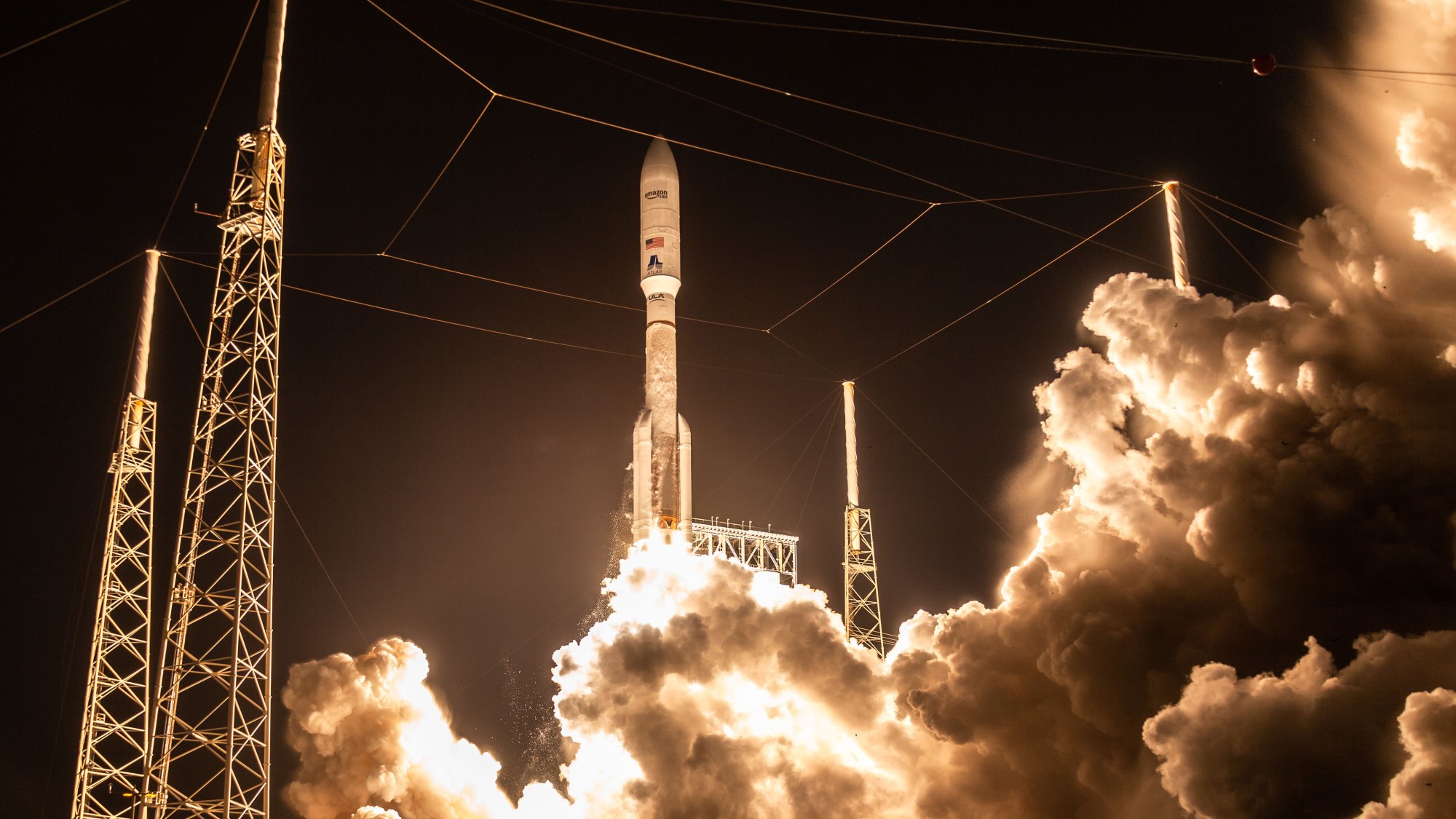
Photo: Manuel Mazzanti/NurPhoto via Getty Images
Maintaining the Space Edge: Strategic Reforms for U.S. Dominance in Low Earth Orbit
Taylar Rajic, Lauryn Williams, and Matt Pearl argue how LEO constellations are one of the most critical and cutting-edge components of digital infrastructure and without immediate strategic reforms, the United States risks losing its lead to China.
If Trump Strikes Iran: Mapping the Oil Disruption Scenarios
Clayton Seigle assesses the risk of oil supply disruptions that could result from a new conflagration in the Middle East Gulf region.
A National Asset: The Colorado Quantum Ecosystem
Sujai Shivakumar and his team examine how the Colorado quantum ecosystem is a remarkable source of innovation for the United States.
Takaichi Landslide Shows Limits of Chinese Economic Coercion
Philip Luck examines the recent Japanese election, highlighting how economic coercion against democracies can often strengthen government support and influence electoral outcomes.
Understanding Federal Equity Investments in Strategic Companies
Sujai Shivakumar, Charles Wessner, and Christina Tutino assess how the U.S. government is now a direct shareholder in private companies, moving beyond traditional market-based approaches to competitiveness that have marked postwar U.S. policy.
Where Sovereignty Meets Statecraft: South Korea’s Fairness Act and the U.S. Alliance
Philip Luck and Richard Gray examine whether The Fairness Act will test whether the United States and South Korea can manage regulatory differences without sacrificing strategic cooperation.
Understanding China’s Quest for Quantum Advancement
Hideki Tomoshige and Phillip Singerman examine where China stands today in its efforts to build capabilities across five quantum technology areas and how it is pursuing quantum innovation leadership.
India’s New Ambitions on Trade Must Be Paired with Domestic Reform
Richard Rossow argues that while India’s new trade confidence, marked by deals with the U.S. and the EU, signals a break from protectionism, trade gains won’t stick without domestic reforms, especially at the state level, where land, labor, and power policies will decide success.
How Russia Is Reshaping Command and Control for AI-Enabled Warfare
Kateryna Bondar examines how Russia conceptualizes, builds, and adapts its command and control (C2) architecture under wartime pressures, in the first installment of a series on Russia’s use of AI in military operations.
Sand Leaking Out of the Bag: Eroding American Influence
William Reinsch examines how U.S. partners have looked beyond the United States to diversify their trading relationships and reduce their holdings of U.S. bonds.
Is China Leading the Robotics Revolution?
The CSIS China Power Project examines the growing role of robots in China’s economy and the resulting geopolitical impacts from China’s transforming industrial landscape.

Highlights of 2025 | Betting on America
In this special episode of Betting on America showcases the highlights of conversations from 2025. The episode covers major themes including U.S.–China technology competition, economic security tools, AI and productivity, trade imbalances, the U.S. tech offer to the Global South, and national interest–driven investing.
The Trade Guys
On this emergency episode, Bill and Scott break down the Supreme Court’s 6-3 decision striking down President Trump’s use of the International Emergency Economic Powers Act (IEEPA) for broad tariffs and discuss the implications of the decision for global trade.
Cache Me If You Can
As demand for cloud services, AI workloads, and high-performance computing accelerates, data centers have become critical national assets—while also emerging as flashpoints for debates over energy use, land, labor, and local governance.
The Trade Guys
On this episode of the Trade Guys, Bill and Scott unpack the House vote to override President Trump's tariffs on Canada, recent Indian dealmaking with the U.S. and EU, rising trade tensions between the EU and China, and the return of shipping commerce to the Suez Canal route.
The AI Policy Podcast
On this AI Policy Podcast episode, Greg Allen is joined by Stephen Clare and Stephen Casper to discuss how the latest Safety Report compares to the first edition, explore the report’s findings on technical safeguards, and unpack its policy implications.
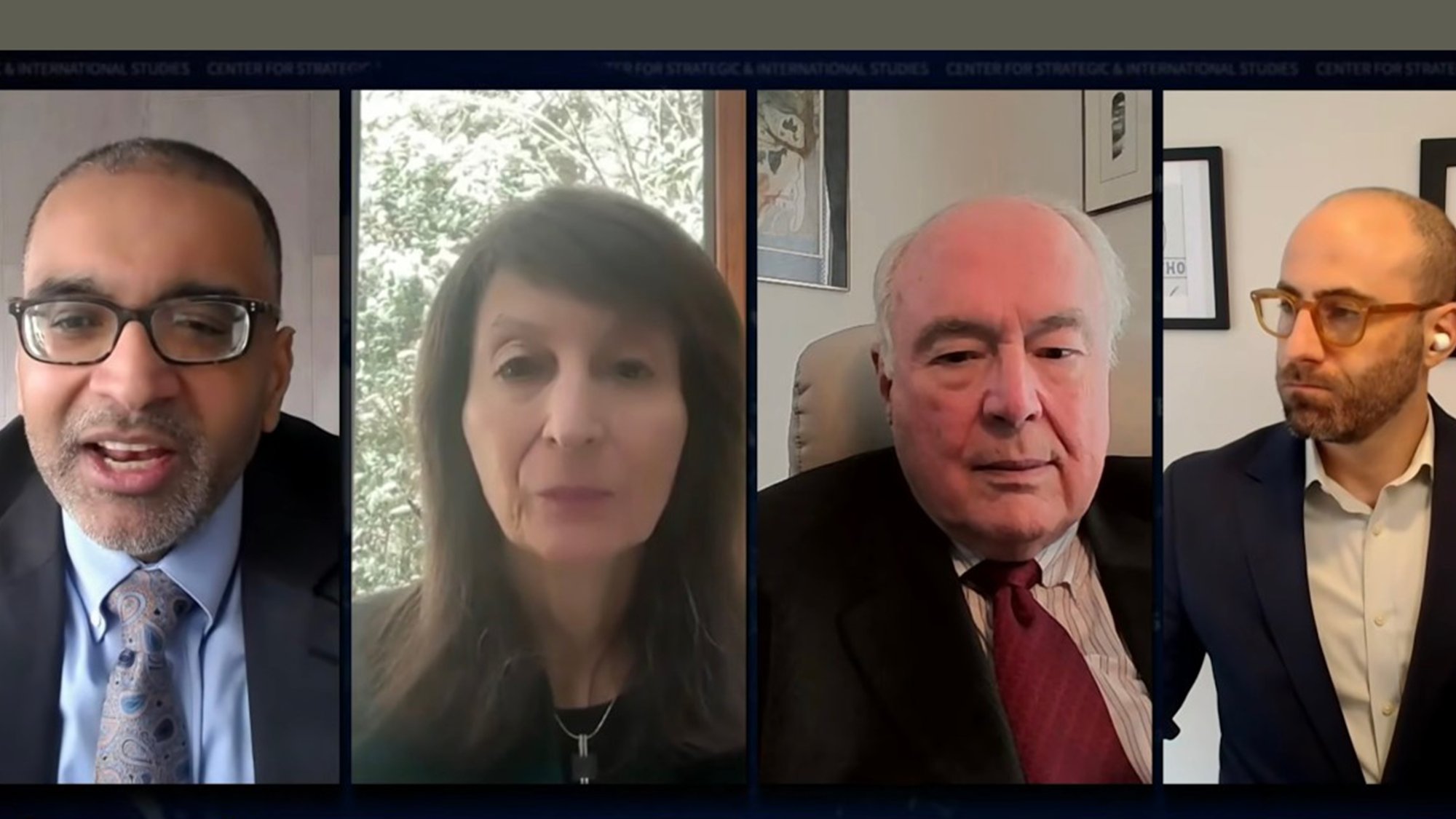
Photo: CSIS
What Comes Next for U.S. Trade Policy After the Supreme Court’s IEEPA Ruling?
Navin Girishankar, Phil Luck, Bill Reinsch, and Angela Ellard examine the economic and geopolitical implications of the Supreme Court’s decision to strike down the use of the International Emergency Economic Powers Act (IEEPA) and assess how it could reshape the administration’s strategy and trade toolkit going forward.
What is Causing Electricity Prices to Rise?
Catch The Recap: The CSIS Energy Security and Climate Change Program hosted a discussion with Allison Clements, Partner at ASG, and Ryan Hledik, Principal at The Brattle Group, exploring the factors behind rising electricity prices & the role AI data centers will play in future rate trajectories.
Powering National Renewal and Reinvigorating the Grid
RSVP: The CSIS Energy Security and Climate Change Program is exploring where today’s approach to grid planning and investment is falling short, the risks of underbuilding transmission, and how to ensure infrastructure investments strengthen reliability while prioritizing affordability and economic growth.
Powering the Future: The U.S. and Indian Energy Landscape in 2030
Catch The Recap: India and the United States are both experiencing a surge in electricity demand and facing growing challenges in ensuring affordability, integrating renewables, and grid modernization. This was a high-level discussion featuring senior leaders from the U.S. and Indian power sectors.
AI-Ready DISCOMs: Policy Actions to Advance Grid Digitalization
Catch the Recap: The CSIS Chair on India and Emerging Asia Economics hosted an event in partnership with the All India DISCOMs Association (AIDA) and the National Association of State Energy Officials (NASEO), USA.
